Showing posts with label Math. Show all posts
Friday, June 19, 2020
Pixel Art
This week, we took up the Math-Art challenge of creating a design with a hundred grid. It relates to Fractions and Decimals and creates a pixelated art piece. Check out a few examples below!
Monday, June 15, 2020
Clouds
Over the last two weeks, we have explored clouds in Weather. We studied the names of the different clouds and learned how they form. We understand that clouds can predict weather changes. With our eyes on the sky, we documented the clouds we saw this week and wrote weather predictions to match them.
In an effort to understand when and why it rains, we tried a Saturation Station cloud experiment. Using a sponge as a cloud, we added drops of water one-by-one to the sponge. We saw that the sponge could actually hold much more water than most of us predicted. It "rains" when the sponge is so saturated (filled with water) that it can't hold any more, just like a cloud.
We discussed the different factors that led to us having such different results (like sponge size, eye dropper size, etc). Then, we represented our data in a bar graph and a pictograph using a scale of 10.
Thursday, May 28, 2020
Tracking Rain
We are putting on our meteorologist hats and starting our Weather unit in Science!
Last week, we had to track the forecast and actual rainfall for three days at home. Ms Elder couldn't have chosen a better week because we ended up with a record amount of rainfall on Thursday!
This learning task was a great discussion-started about the accuracy of scientific experiments. We knew that we couldn't accurately compare our data because there were so many uncontrolled factors. Below are all of the ones we brainstormed. We also discussed why we might get different results even if we controlled for these factors.
The official Weather stats for Calgary documented 33.3 mm of rain for Thursday. That breaks the record from the past 100 years. In 1948, Calgary received 30 mm of rain.
We also took the opportunity to talk about water safety. Our rivers swell when we get that much rain and there was flooding in parts of the city. Firefighters were warning Calgarians to stay away from the edge of the river, avoid going into pathway underpasses, and not to raft.
We will be studying clouds next!
Tuesday, May 12, 2020
Probability Experiments
Last week our Grade 5 students were engaged in work on Probability. As a follow-up to some work we did earlier in the year in class, we created games of chance to assess their probability outcomes. We are working on using language like “certain, likely, unlikely, and impossible.”
Check out some of the games we made:
These spinners show that yellow is "likely" to be spun, green and red are "unlikely" and green and red are "equally likely." Blue is "impossible."
This spinner shows that green and red are "unlikely" and "equally likely" and blue is "very unlikely."
When picking these marbles, light blue would be "very unlikely," yellow and purple are "equally likely," and dark blue is "unlikely." Red is "impossible."
We can also express Probability in fractions. This is something we'll be working on in June.
Friday, May 1, 2020
Building a Vehicle that Moves
Throughout April we have been working on a building project for Science. Our task was to design and build a vehicle that moves from a force such as elastic, wind, spring, or inflated balloon. We could not push it ourselves or use gravity.
The focus of the project was evaluating different designs scientifically, and being able to make changes to improve the distance our vehicles travelled. Measurement was the tie to Math.
Some students made cars. Some even chose to make a boat, a plane, or a hot air balloon! Here are some photos of the different vehicles we made:
The focus of the project was evaluating different designs scientifically, and being able to make changes to improve the distance our vehicles travelled. Measurement was the tie to Math.
Some students made cars. Some even chose to make a boat, a plane, or a hot air balloon! Here are some photos of the different vehicles we made:
Thursday, April 2, 2020
Quilting: How to Stitch your Squares Together
For previous quilting steps, click here.
STEP FOUR: Sew the Squares Together
Using a thread that's the same colour as your fabric, thread your needle.
Choose two squares that you'd like to be side by side. Put them together facing each other so that you're seeing both of the paper squares.
Starting in one corner, poke through the fabric of both squares. Try not to poke through the paper this time.
Use a whipstitch to stitch the two squares together along ONE edge only. If you run out of thread, tie it in a knot a few times, rethread your needle and keep going. When you get the the other corner, tie a knot a few times.
Then open your squares back up to see that you stitched together the edge that you wanted to. I make mistakes all the time and I use my seam ripper to take my stitches out. Ask an adult for help if you do this.
Choose the next two squares to stitch together and follow the instructions again.
Watch the videos to see the steps.
Here is what the finished product should look like:
STEP FOUR: Sew the Squares Together
Using a thread that's the same colour as your fabric, thread your needle.
Choose two squares that you'd like to be side by side. Put them together facing each other so that you're seeing both of the paper squares.
Starting in one corner, poke through the fabric of both squares. Try not to poke through the paper this time.
Use a whipstitch to stitch the two squares together along ONE edge only. If you run out of thread, tie it in a knot a few times, rethread your needle and keep going. When you get the the other corner, tie a knot a few times.
Then open your squares back up to see that you stitched together the edge that you wanted to. I make mistakes all the time and I use my seam ripper to take my stitches out. Ask an adult for help if you do this.
Choose the next two squares to stitch together and follow the instructions again.
Watch the videos to see the steps.
Here is what the finished product should look like:
Friday, March 20, 2020
Quilting: How to Baste
Here are the steps for completing your quilting squares at home. If you didn't come into the school to pick yours up, you can make a new one with any scrap fabric you have around the house. :)
STEP ONE: Measuring your Squares
Measure accurately so that the quilt pieces will fit together.
You need four small squares and one large square.
The small squares need to be 6.3 cm on each side.
The big square needs to be 12.7cm on each side.
STEP TWO: Cutting the Fabric
Choose five pieces of fabric that are the same colour palette (monochromatic). The patterns can be different.
Cut out fabric so that is a bit bigger than your paper so you can fold it over on each side (approximately 1 cm extra on each side). This measurement does not need to be completely accurate.
STEP THREE: Basting the Fabric to the Squares
Thread the needle and sew the fabric to the paper. This is called basting.
Make sure the side of the fabric you want to see is facing out. Whatever side is touching the paper, you won't see.
Watch the video to know how to baste.
(I had to decrease the quality to low to be able to upload the video so I hope that you're able to see it!)
For basting, we usually use a different coloured thread than the fabric so that it stands out easily. We will be taking these threads out later.
STEP ONE: Measuring your Squares
Measure accurately so that the quilt pieces will fit together.
You need four small squares and one large square.
The small squares need to be 6.3 cm on each side.
The big square needs to be 12.7cm on each side.
STEP TWO: Cutting the Fabric
Choose five pieces of fabric that are the same colour palette (monochromatic). The patterns can be different.
Cut out fabric so that is a bit bigger than your paper so you can fold it over on each side (approximately 1 cm extra on each side). This measurement does not need to be completely accurate.
STEP THREE: Basting the Fabric to the Squares
Thread the needle and sew the fabric to the paper. This is called basting.
Make sure the side of the fabric you want to see is facing out. Whatever side is touching the paper, you won't see.
Watch the video to know how to baste.
(I had to decrease the quality to low to be able to upload the video so I hope that you're able to see it!)
For basting, we usually use a different coloured thread than the fabric so that it stands out easily. We will be taking these threads out later.
Check back soon for a video on how to hand stitch the squares together!
Monday, March 16, 2020
Re-Designing a Social Agency Logo
![]() |
| Here are the current logos for 4 Calgary agencies. |
We then got to choose one of the four organizations to design a logo for. We used graph paper so that we could easily make our logos symmetrical, as well as use polygons in our design. Then, we counted the total area of our logos, so there was lots of Math used in the making of these!
We also coloured ours and described how our designs and colours used represented the social agency. We'll share this work with you at our next Student Learning Conferences (date to be announced).
Friday, March 13, 2020
Multiplication Quiz Wednesday
This is a reminder that students have a quiz on Wednesday, March 18.They will be expected to:
- Represent Multiplication equations using arrays, pictures of groups, and Base Ten blocks
- Solve equations up to 9 x 9
- Solve 2 or 3-digit by 1-digit equations showing their thinking (ex: 231 x 6) see picture example of the Algorithm
- (Grade 5's Only): Solve 2-digit by 2-digit equations showing their thinking (ex: 24 x 63)
For a review of the different strategies we've used, click here.
To practice, students are encouraged to complete activities on Mathletics under the "Multiplying" heading.
Thursday, March 12, 2020
Guess My Number
We had fun today playing "Guess My Number" in Ms Elder's Multiplication group.
We used Yes/No questions to figure out the number on our back. Here were some questions we brainstormed:
Tuesday, March 10, 2020
Quilting
Last week, Ms Elder read us the book, The Quilt-Maker's Gift. Most people thought it was an agreeable idea to make a quilt as a class. We would like to make our own quilt to give away to someone in need, just like the woman in the book. "Some people want something but they don't need it."
This week, we're making the quilt!
First, we had to measure the paper to make squares. We need to measure accurately so that it will fit together to make a quilt, like a puzzle. We measured each square side as 6.3 cm to make a big square that's 12.7cm long and wide.
After we measured the paper, we cut out fabric that is a bit bigger than your paper so you can fold it over. We had to pick fabric of only one colour (monochromatic). You could choose five different fabrics of one colour. We agreed to make the quilt colourful so in the end, it will be a rainbow.
Then, Ms Elder taught us how thread the needle and sew the fabric to the paper. This is called basting. Later this week, we will finish basting and hand stitch the pieces together.
This week, we're making the quilt!
First, we had to measure the paper to make squares. We need to measure accurately so that it will fit together to make a quilt, like a puzzle. We measured each square side as 6.3 cm to make a big square that's 12.7cm long and wide.
After we measured the paper, we cut out fabric that is a bit bigger than your paper so you can fold it over. We had to pick fabric of only one colour (monochromatic). You could choose five different fabrics of one colour. We agreed to make the quilt colourful so in the end, it will be a rainbow.
Then, Ms Elder taught us how thread the needle and sew the fabric to the paper. This is called basting. Later this week, we will finish basting and hand stitch the pieces together.
![]() |
| "We are measuring our squares." |
![]() |
| "We had to be really careful. If we messed up, it wouldn't fit in the quilt." |
![]() |
| "Some of us are choosing the pieces of fabric for our quilt." |
![]() |
| "We are practicing basting." |
![]() |
| "This is Ms Elder's demo. This is what the finished squares will look like." |
Wednesday, March 4, 2020
Long Multiplication Strategies
We are learning strategies to solve larger multiplication problems. Here are three strategies we learned yesterday:
Base Ten Blocks
We can use Base Ten blocks to show numbers. We can multiply by the ones place, then the tens place, and so on.
Breaking it Down
For this strategy, you break the number down into the ones, tens, and hundreds place (and so on) and multiply by each. This works well if you're multiplying a one-digit number by a multi-digit number. It can be tough to keep track of the multiplying if you're equation is a 2-digit by 2-digit problem.
The Box
Draw a box. If you're multiplying a 2-digit by 1-digit number (ex: 28 x 7), you would draw a box with two rows and one column. Then, you would multiply each box (ex: 20 x 7, then 8 x 7). Then, you need to add up the numbers in each box.
We are learning these different strategies to show our understanding of Place Value. It shows our steps really well. (This is called "conceptual understanding"). After we have explored different strategies, we get to use the one we like the best.
Subscribe to:
Posts (Atom)
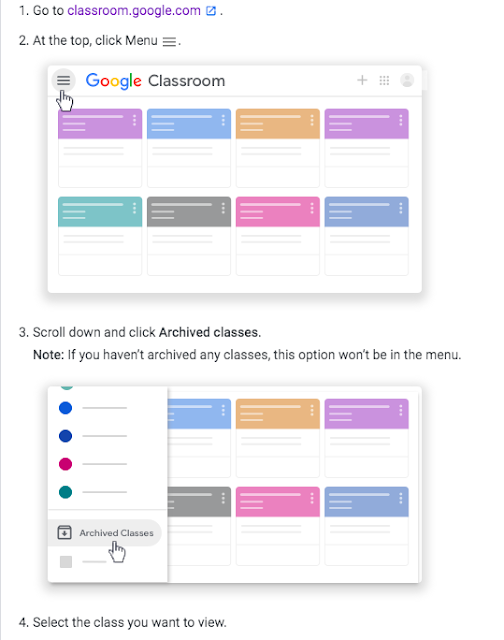
How to View our Google Classroom
Hi Everyone, One last quick note from me: As per instructions, I have "Archived" our Google Classroom. You are still able to v...
-
We are learning about Weather this year in Science. Throughout the year, we have been talking about chinooks and noticing cloud patterns. ...
-
Reminder: We are Cross-Country skiing Monday, Tuesday, and Wednesday next week (Jan 20-22). Please ensure your child comes prepared in appro...
-
A bed you can rent for free if you need it Brainstorming We are preparing for our week at Mustard Seed School by learning about th...